College Students Are the Users, Their Parents Are the Market
· Paige Karchmar · Marketing / Gen Z
Parents are now hiring local "college concierges" to bring their kid soup, pick up prescriptions and check in when nobody answers the phone, and once I stopped laughing I realized it is a genuinely smart business.
I have heard about parents staying very involved once their kids go to college. Tracking locations, ordering groceries, texting reminders about appointments that are three weeks out. I definitely know people whose parents are more involved than others.
But I do not personally know anyone who has a second mom on retainer.
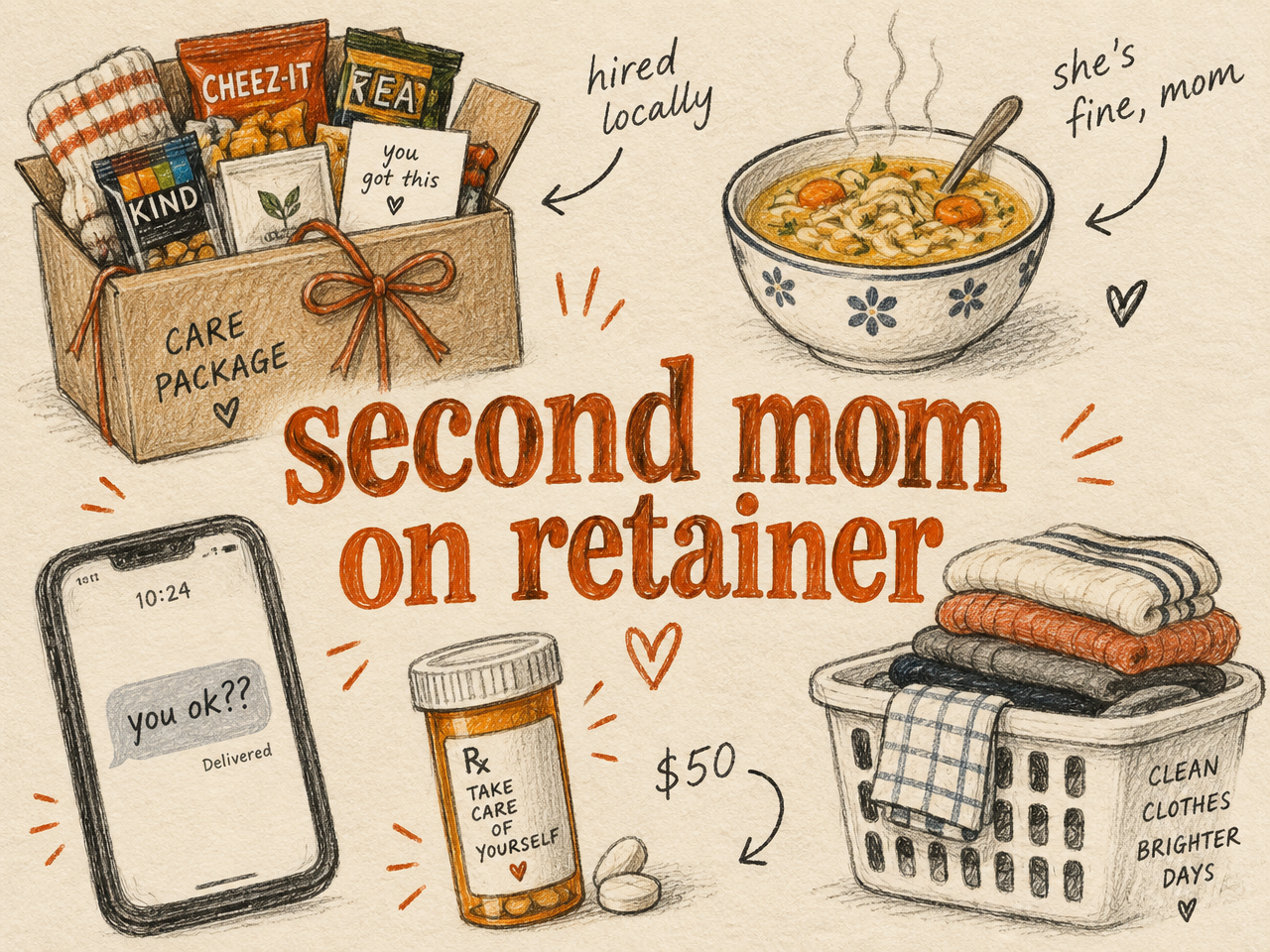
Apparently that is now a thing. A New York Times story this week looked at college concierge businesses popping up in college towns. Parents can hire someone local to bring their kid soup when they are sick, pick up a prescription, help with laundry, drop off birthday treats, or just go check on them when Mom has not heard back in two days.
And it is not some far-off thing happening at schools I have never been to. There are real companies in Austin built around this for UT families, selling finals care packages and check-ins and little pieces of home, and they market straight to the parents.
My first reaction was that this is insane. My second was that this is actually a really smart business.
The Student Is Not the Customer
The college student is not necessarily the one buying anything here. The parent is.
And what the parent is buying is not really laundry or chicken soup. They are buying the ability to do something when their kid is hundreds of miles away and not picking up the phone.
That distinction matters more than it sounds like it should.
Same Task, Completely Different Product
There are already plenty of services aimed at college students. Food delivery, laundry, rides, groceries. You can outsource basically every annoying part of being alive from your phone, and most people I know already do.
College concierge businesses package some of those exact same tasks differently. They turn them into care.
"Someone will deliver your groceries" is useful. "Someone local is looking out for your daughter" is emotional. Very different product, even when the errand is identical.
Ask Who Worries About Your Customer
It also explains why something that sounds ridiculous at first can make complete sense once you know who is paying and why.
A lot of marketing starts with the person using the product. What does she need, what problem does he have, what would make this easier. That is the obvious question, and it is usually the right one.
But sometimes the more important question is one level removed:
- Who worries about the person using this?
- Who wants them to succeed?
- Who feels responsible when something goes wrong?
- And who is willing to pay to make that feeling go away?
College students may be the users here. Their parents are the market.