When Did Watching Sports Start Feeling Like Checking a Stock Portfolio?
· Paige Karchmar · Trends / Culture
Sports betting didn't suddenly show up on college campuses this year. What's new is how normal it looks now.
I'm not going to pretend sports betting suddenly appeared on college campuses this year. It's been around. People have opinions. Games have odds. None of that is new.
What feels new is how normal it looks now.
Betting used to feel like a separate thing happening next to the game. You watched, and somewhere else, someone else was placing a bet on it. Now the odds are just part of the broadcast. They're in the group chat. They're in a TikTok before the ball is even tipped.
And the apps people are using don't really look like gambling anymore. They look like Robinhood.
The Daily Texan asked the right question
A recent Daily Texan column asked, "Are we betting away sports culture?" and honestly, I've been thinking about that line for a week.
The piece talked about how apps like Underdog, Kalshi and Polymarket have quietly become part of the way some students watch sports. It quoted UT communications professor Michael Butterworth, who pointed out that the constant presence of odds, sponsorships and stats can change how people experience a game, even if they've never placed a bet themselves.
That's the part that stuck with me. You don't have to use one of these apps for the apps to change what watching a game feels like. Once every play has a number attached to it, the whole thing starts to look a little different.
Knowing things suddenly feels monetizable
College students have always argued about sports. Somebody always knows which team is overrated, which player is about to pop off, which coach is one bad decision away from a group chat meltdown.
Prediction apps slide right into that conversation with a pretty seductive pitch: if you actually know what you're talking about, you should be able to make money off of it. That doesn't feel like luck. It feels like confidence. It reframes the person tapping the button as informed, not risky. They saw something everyone else missed. They're not gambling, they're right.
The apps don't look reckless
Casinos are designed to feel like casinos. Neon, noise, no windows, no clocks. You know exactly what you walked into.
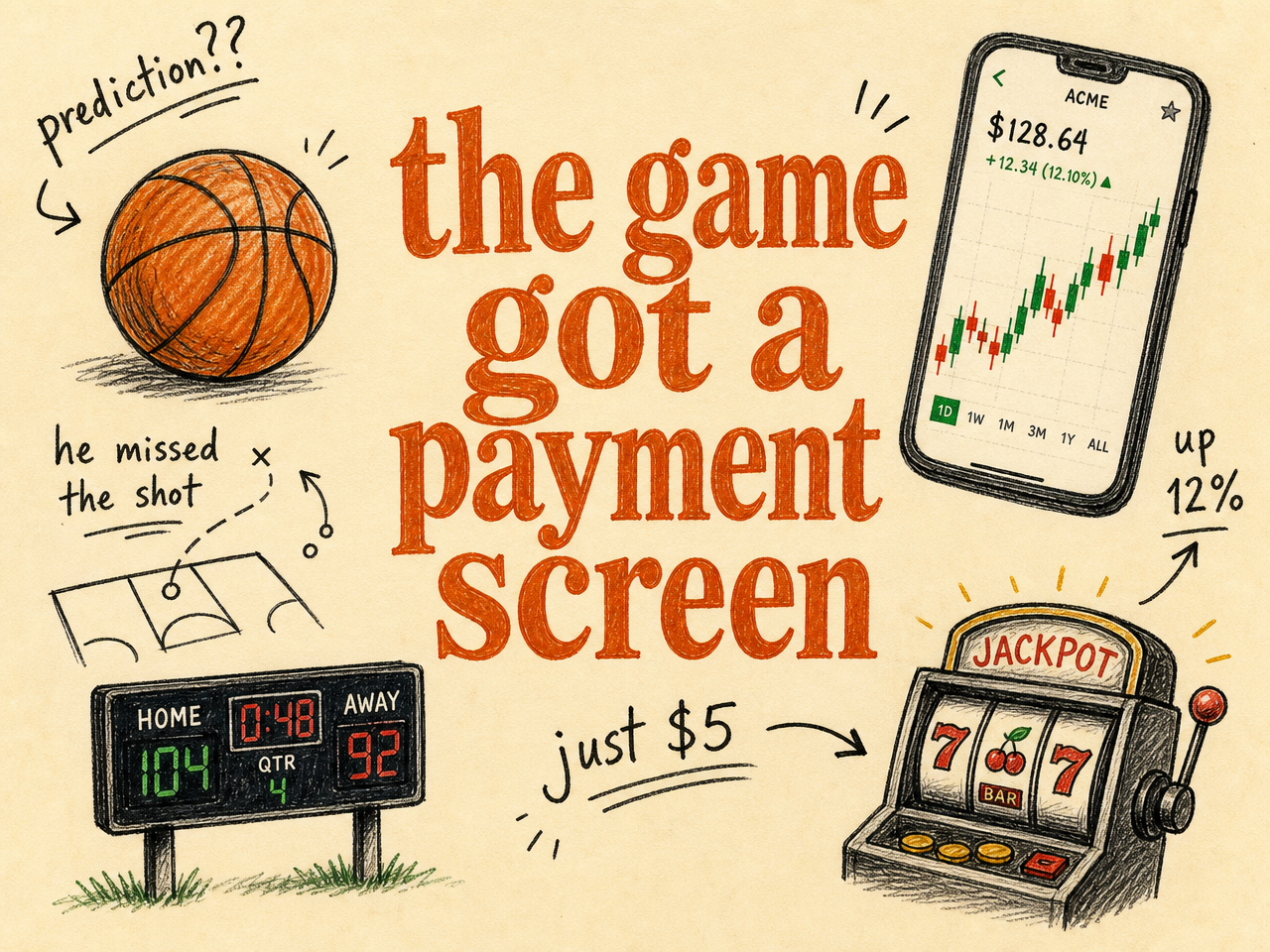
Prediction-market apps are the opposite. Clean interface, percentages, little charts, financial language. You buy a "contract." You take a "position." It looks closer to a brokerage account than a slot machine, and even the word prediction sounds like something a smart person does. Betting sounds risky. Prediction sounds analytical.
But losing twenty bucks because a player didn't score is still losing twenty bucks, no matter what the button was called.
Winning is loud, losing is quiet
Social media makes all of this feel weirder than it actually is. People post the perfect pick, the screenshot where five dollars turned into a hundred, the parlay that hit. Nobody posts the boring Tuesday where they lost the same five dollars back.
So the version of betting that shows up on your feed is basically a highlight reel, and highlight reels make winning look way more common, and skill look way more decisive, than either of them probably are. That's not unique to betting, social media does that with grades and internships and relationships too. But when money is involved, the gap between what gets posted and what usually happens matters a lot more.
It changes the way people watch
The biggest shift isn't really financial though. It's emotional.
A great play isn't just great for the team anymore, it might also complete somebody's bet. A missed shot isn't just disappointing, it might have cost someone rent money. Athletes start feeling less like people playing a game and more like pieces inside somebody else's transaction. That's part of why players are getting angrier and angrier messages from strangers who feel like they were personally owed a result.
The game is still entertainment. It just picked up a bunch of customers who think they were promised a specific outcome.
The interesting part of all this isn't really that college students gamble. It's how thoroughly gambling got redesigned for people who would never call themselves gamblers.
It looks analytical. It feels social. It fits inside a phone. And it attached itself to something we were already going to watch anyway.
That's why these apps grew so fast. They didn't ask anyone to pick up a new habit. They took an old one, arguing about what's going to happen next, and added a payment screen.